

Panel or Check? Assessing the benefits of integrating households in energy poverty into energy communities
Energy poverty continues to be one of the major social and environmental challenges in Europe. With more than 35 million people affected in 2020, according to the European Union, this problem not only impacts people’s well-being, but also jeopardises fair energy transition policies. In this context, a recent article published in the journal Sustainable Energy Technologies and Assessments, entitled ‘Panel or check? Assessing the benefits of integrating households in energy poverty into energy communities’, puts forward an innovative proposal to address this issue.
This work has been carried out by a multidisciplinary team made up of I. Aparisi-Cerdá, Á. Manso-Burgos, D. Ribó-Pérez, N. Sommerfeldt and T. Gómez-Navarro, who have combined economic, social and technological approaches to propose a more sustainable and equitable solution.
Beyond traditional subsidies
The article starts from a clear criticism: traditional subsidies, such as the well-known Bono Social in Spain, are a palliative solution that does not address the roots of the problem. Although they help to temporarily alleviate the bills of vulnerable households, they do not contribute to reducing energy consumption or improving environmental sustainability.
The study proposes a paradigm shift: instead of directly subsidising energy consumption, these funds could be used to integrate vulnerable families into energy communities based on shared photovoltaic systems. This alternative not only reduces household energy costs, but also fosters a more inclusive energy transition.
Case study in Valencia
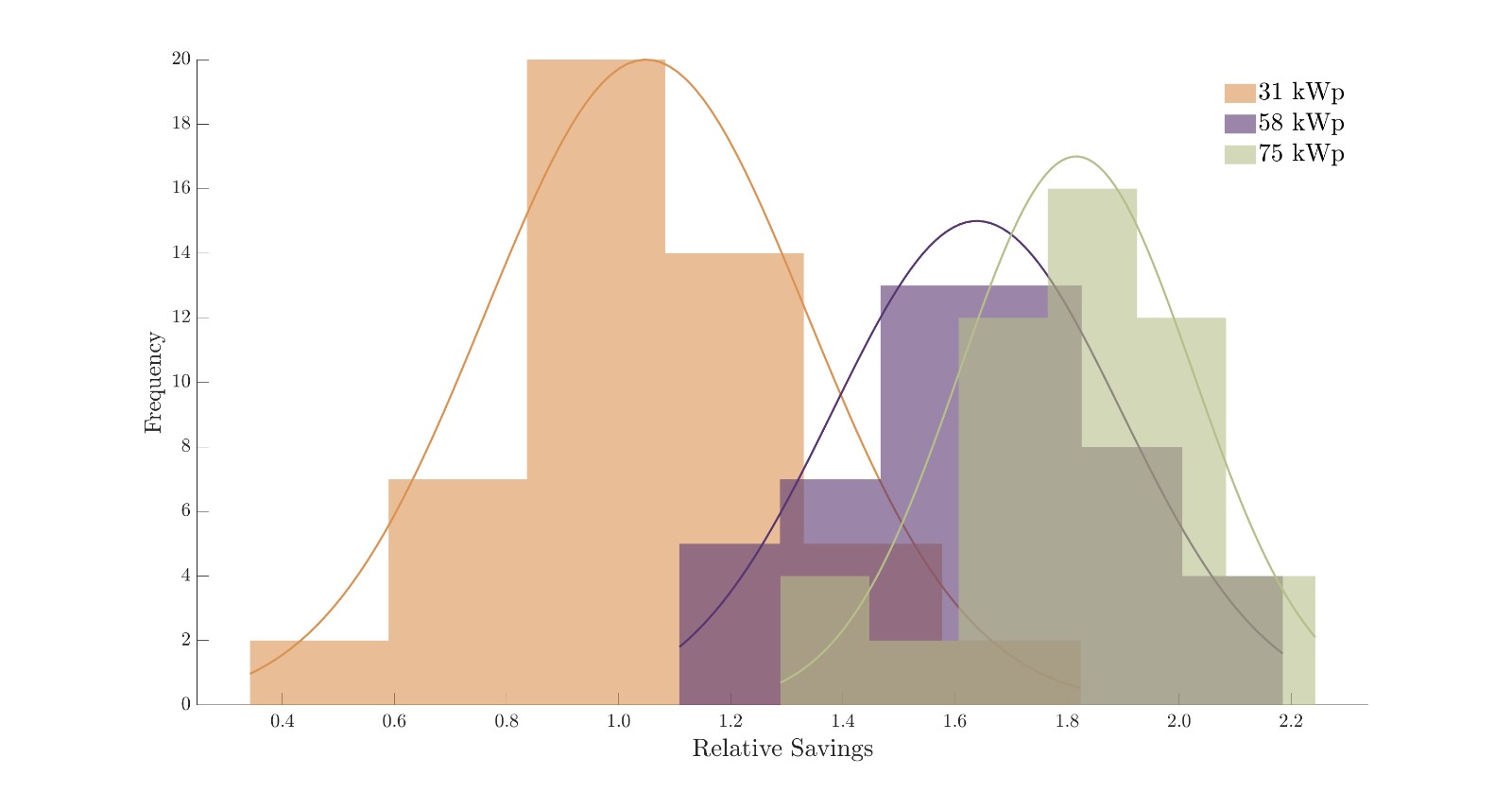
To demonstrate the viability of this idea, the authors carried out a simulation in Valencia, Spain, involving 50 vulnerable households. The results are revealing:
- Reduction in public costs: A shared 31 kWp photovoltaic system would save €58,000 in subsidies over 20 years, a reduction of 50%.
- Increase in household savings: Participating households could increase their savings by 82% compared to the current subsidy model.
- Environmental sustainability: This approach would reduce greenhouse gas emissions, aligning with European climate objectives.
In addition, the study analysed how different sizes of photovoltaic installations impact on the results. For example, a 58 kWp system completely eliminates the need for additional subsidies to guarantee a minimum saving of 40% on household energy bills.
Social and political implications
The study highlights that the integration of vulnerable households into energy communities not only makes economic sense, but also represents a step towards energy justice. This proposal allows people who have historically been left out of the energy transition to actively participate in it, improving their quality of life and reducing their dependence on external aid.
For policy makers, this approach offers a practical roadmap for redesigning social and energy policies. By optimising the use of public funds and fostering community collaboration, energy communities could become a central pillar of national strategies against energy poverty.
A replicable model
Although the case study focuses on Valencia, the model presented by the authors is highly replicable. With the necessary adjustments, it could be adapted to other cities and regions, both in Spain and in Europe, that face similar challenges.
The key lies in the collaboration between public institutions, researchers and local communities to ensure that the economic and environmental benefits reach those who need them most.
This work represents a significant contribution to the debate on how to tackle energy poverty in a sustainable and inclusive way. You can read the full article in Sustainable Energy Technologies and Assessments.
It’s time to ask ourselves: panel or check? Are we still committed to palliative solutions or are we taking a




