


A delegation of researchers from the Chair of Urban Energy Transition travelled to Lisbon (Portugal) to take part in the 2nd International Conference on the Net Zero Carbon Built Environment (ZCBE 2026). This prestigious event, held from 8 to 10 July 2026 at the Rectorate of the Universidade NOVA de Lisboa, has established itself as a key scientific forum for exchanging cutting-edge strategies aimed at accelerating climate neutrality in cities.
Our delegation, made up of researchers Carlos Vargas Salgado, Álvaro Manso Burgos, Lucas Martínez Rodríguez and Mireia Roncero Tarazona, presented a strong body of scientific research. The papers directly reflect the Chair’s technical commitment to the transfer of practical knowledge and public service to our funding bodies, OAM València Sostenible and the Fundación València Innovation Capital, with the firm aim of establishing València as a benchmark in decarbonisation.
Below, we set out the contributions that shaped the Chair’s presence at the congress:
BLOCK I: Energy Efficiency, Advanced Algorithms and Solidarity Communities
1. Energy audit in protected buildings: the case of Las Naves
Researcher Carlos Vargas Salgado presented the paper entitled:
-
“Energy Audit of a Historical Public Building with Multipurpose Use: The Case of Las Naves in Valencia” (co-authored with Teresa Magraner Benedicto, Mar Cañada Soriano, Carla Montagud Montalvá and Dácil Díaz Bello).
This research presents the findings of the thorough energy audit — carried out under Royal Decree 56/2016 and the UNE-EN 16247 standard — conducted at the Las Naves multi-purpose complex. By characterising demand by end use and detecting parasitic loads, the study calculates performance indicators (CO₂/m²) and sets out the operational actions needed to resiliently integrate photovoltaic systems with storage (PV+BESS), turning this protected heritage site into an active prosumer.
2. The university campus as a model for urban transition at city scale
PhD researcher Lucas Martínez Rodríguez led a two-part contribution within the sessions dedicated to the European project SHERLOCK. His first paper was:
-
“University Campuses as Small Urban Systems for Advancing the Energy Transition: UPV Vera Campus Case Study (Spain)” (in collaboration with Paula Bastida Molina, Dácil Díaz Bello, Carlos Vargas Salgado and Carla Montagud Montalvá).
Using the UPV’s Vera campus as a “Living Lab” at small urban-system scale, the work quantitatively assesses the potential for integrating renewables. The models show that combined on-site technologies (solar photovoltaic and thermal, geothermal, aerothermal and biomass) could cover between 48% and 52% of the campus’s demand, providing a climate-planning framework that is directly transferable to other large urban institutions.
3. Workforce training and governance in the construction sector
In his second presentation within the European framework, Lucas Martínez Rodríguez addressed a critical, intangible factor of the energy transition:
-
“A Framework for Designing Local Knowledge Hubs for Workforce Upskilling in the Construction Sector in the Context of the Energy Transition” (with Paula Vega, Nicole Ramirez, Marta Arniani, Mattia De Rosa, Vincenzo Bianco and Carla Montagud-Montalvá).
Linked to the RESSKILL initiative, this paper designs and validates the governance structure of local knowledge nodes (Knowledge Hubs). Applied across four European countries (Spain, Italy, Greece and Ireland), the model brings together mapping of key stakeholders to co-create micro-credentials and training programmes that adapt the construction workforce’s skills to the building demands of decarbonisation.
4. Energy justice and storage in solidarity energy communities
The Chair’s manager, Álvaro Manso Burgos, presented one of the Chair’s lines of work with the greatest social impact, focused on mitigating residential vulnerability:
-
“Decarbonising Social Services: Storage Integration and Beneficiary Profiling in Solidarity Energy Communities” (developed with David Ribó-Pérez, Isabel Aparisi-Cerdá, Stijn van der Voort, Tomas Gomez-Navarro and Nerea Tapia-Sinesio).
Using real hourly consumption data from 43 vulnerable households in València, the authors optimised a techno-economic model for solidarity Renewable Energy Communities (RECs). The study reveals that purely photovoltaic systems have limited efficiency in households with very low consumption. Integrating battery storage (BESS) expands the range of economically viable profiles by 50%, mathematically demonstrating how public authorities can turn traditional palliative subsidies into sustainable, efficiency-based assets.
5. Genetic algorithms for optimising shared storage
Finally, Carlos Vargas Salgado closed this technological block by presenting advanced demand-side flexibility solutions:
-
“Smart Energy Management Model for a grid-tied PV system with batteries through A Genetic Algorithm: The Case of a consumer in Valencia” (co-authored by Dácil Díaz-Bello, Carlos Vargas-Salgado, Teresa Magraner-Benedicto, Mar Cañada-Soriano and Carla Montagud-Montalvá).
The research implements an Energy Management System (EMS) based on a genetic algorithm for a real consumer in València. The model dynamically optimises battery charging/discharging strategies and demand response according to indexed market prices. The study specifically assesses how intelligent management of collective photovoltaic surpluses maximises profitability and resilience in community energy models.
BLOCK II: Tourism Sustainability and Mitigation of Urban Entropy (Zentropy Project)
The international congress devoted significant attention to methodologies aimed at mitigating the indirect physical footprints of cities. In this block, Chair researcher Mireia Roncero Tarazona and Iuliia Rytck Molodykh (external researcher from the Zentropy Project consortium) coordinated two closely linked papers, presenting an innovative systemic framework for the sector’s decarbonisation in the city:
6. Thermodynamics-based circular metrics for MICE tourism
Researcher Mireia Roncero Tarazona presented the project’s core conceptual and methodological framework:
-
“Entropy-informed circularity metrics for Meetings, Incentives, Conferences and Exhibitions Events (MICE) tourism: a systems framework and case study” (co-authored with Tomás Gómez-Navarro, Jose Miguel Carot-Sierra and Iuliia Rytck).
In contrast to traditional sustainability indicators, which only measure direct carbon footprint, this work proposes analysing MICE (congress) tourism from a thermodynamic perspective, using entropy as an indicator of the real degradation of the material and energy resources of the host urban system. The study defines the difference between an inertial tourism scenario (business-as-usual) and an improved one, and innovatively introduces the concept of negentropy to capture the positive legacy and the value of the knowledge exchange generated in the city. The methodology is currently being validated using the real case study of the València Conference Centre.
7. Data infrastructure for measuring urban physical degradation
Providing operational continuity to the thermodynamic framework, Iuliia Rytck Molodykh presented the paper focused on data architecture:
-
“Beyond the conference hall: building a traceable data pipeline to measure urban entropy in Meetings, Incentives, Conferences and Exhibitions (MICE) tourism” (with Mireia Roncero-Tarazona, Tomás Gomez-Navarro and Jose Miguel Carot-Sierra).
This contribution addresses the main practical bottleneck of urban sustainability: the dispersion and inconsistency of data spread across multiple local stakeholders. Taking the València pilot as a reference, the paper proposes a processing platform structured in three layers (a flow library, minimum shared data governance with public authorities, and a traceable processing channel). This infrastructure standardises and validates information gathered both within the congress venue and in attendees’ external tourist activities, giving municipal managers an analytical tool (an “entropy calculator”) ready for informed decision-making.
A record of scientific excellence in the service of València
CATENERG’s outstanding presence in Lisbon not only consolidates UPV‘s international standing in the field of energy modelling and just transition, but also equips the city of València with a methodological arsenal tested by the international scientific community. Every algorithm developed, every solidarity storage model and every urban circularity metric presented represent operational tools placed at the disposal of public managers to move forward with firmness, rigour and social cohesion towards our city’s energy transition goals.
Congress Image Gallery (Lisbon 2026)
-
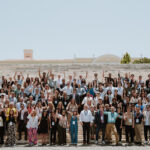
- ZCBE 2026 ©NICOLE SÁNCHEZ


-
- ZCBE 2026 ©NICOLE SÁNCHEZ

-

- ZCBE 2026 ©NICOLE SÁNCHEZ

-

- ZCBE 2026 ©NICOLE SÁNCHEZ



