Education and Participation: Key Takeaways from the Seminar on Educational Resources for Energy Transition
We kicked off 2026 by focusing on the foundation of change: people and education.
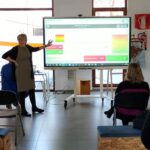
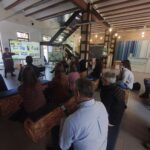
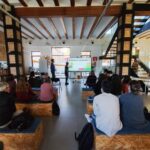
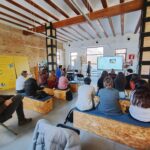
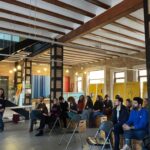
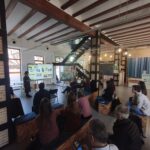
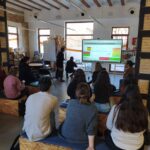
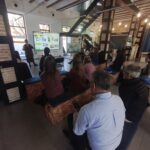
On Monday, 12 January, the CATENERG UPV Chair, together with municipal technicians from Valencia Sostenible and Valencia Innovation Capital, held the ‘Knowledge Transfer Seminar on Educational Resources’.
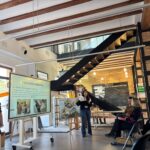
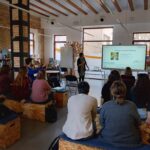
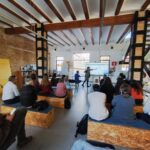
The event, held at the Climate Change Observatory, brought together experts, technicians, and academics to explore how teaching and citizen participation act as indispensable catalysts for accelerating the energy transition.
Presentations: Real projects for a city in transition
The session provided first-hand knowledge of tools and experiences that are already being applied in Valencia. Below, we review the order of the presentations and the topics covered:
- Space as an educator: The conference began with Josep Puentes, Nuria Ortega and Andreu Escrivà (FVCE), who presented the Climate Change Observatory not only as a venue, but also as an ‘educational facility available to all citizens’, which is essential for raising environmental awareness.
- Action in neighbourhoods: Paula Martin (Energy Offices) presented ‘Educational projects for a neighbourhood in transition’, showcasing energy-efficiency and empowerment work with the neighbourhood community.
- Social impact: Manuela Alamos (CATENERG – UPV) provided the social perspective with ‘Youth and children’s voices against energy poverty in Valencia’, sharing proposals to address vulnerability without leaving anyone behind.
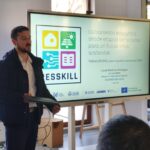
- STEM vocations: Lucas Martínez (CATENERG – UPV) presented the RESSKILL project, entitled ‘The energy transition from an early age for a more sustainable future’, emphasising the importance of fostering scientific vocations among young people.
- Living engineering: Carla Montagud (CATENERG – UPV) explained the ETSII Living Lab, demonstrating how the Higher Technical School of Industrial Engineering acts as a real laboratory for sustainable technologies.
- Water efficiency: Professor Ricardo Cobacho (UPV) gave a presentation focused on water efficiency in educational centres, introducing the SWCI (School Water Consumption Index) indicator.
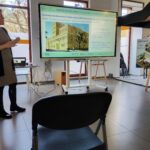
- Nearly Zero Energy Buildings: Finally, Mar Cañada (CATENERG – UPV) and Mar Ferrer (VIC) presented the case of La Harinera, detailing its transformation into an nZEB model and its role as an innovation hub.
Conclusions
The conference reaffirmed that the energy transition is not only a technological issue, but also a cultural and educational one. We would like to thank Valencia Sostenible, Valencia Innovation Capital and all those who attended for making this space for dialogue possible.
We continue to work to transfer knowledge from the UPV to Valencian society.
📂 Materials and Presentations
For those who wish to delve deeper into the technical and methodological details, all the presentations from the conference are available at the following link: