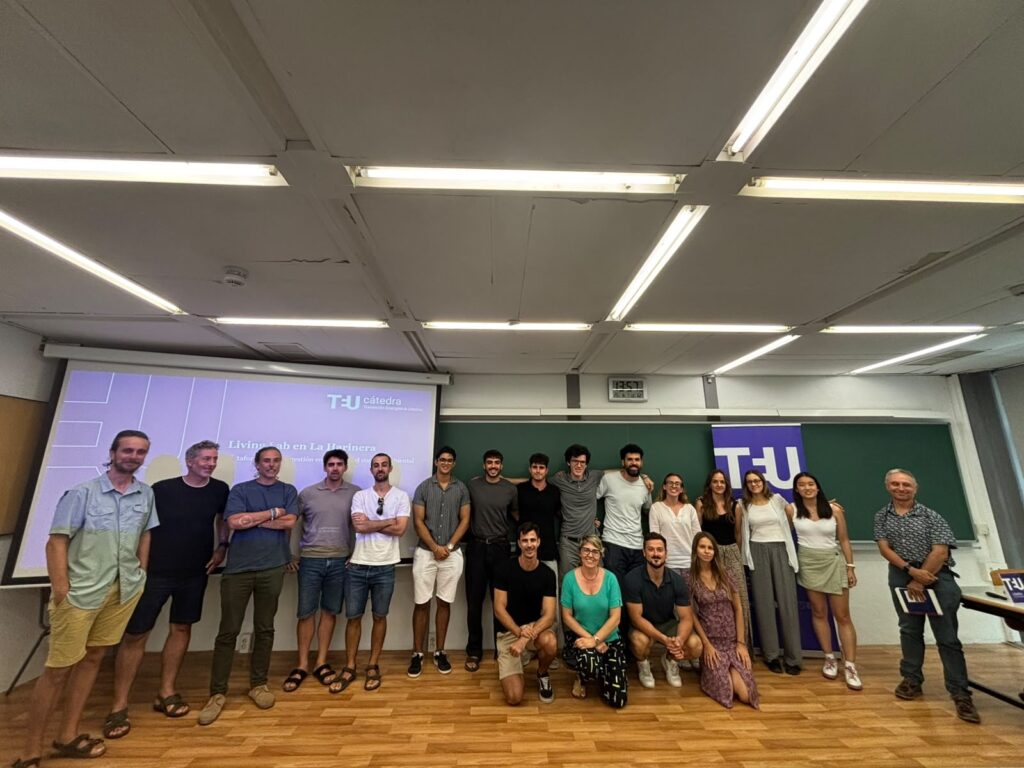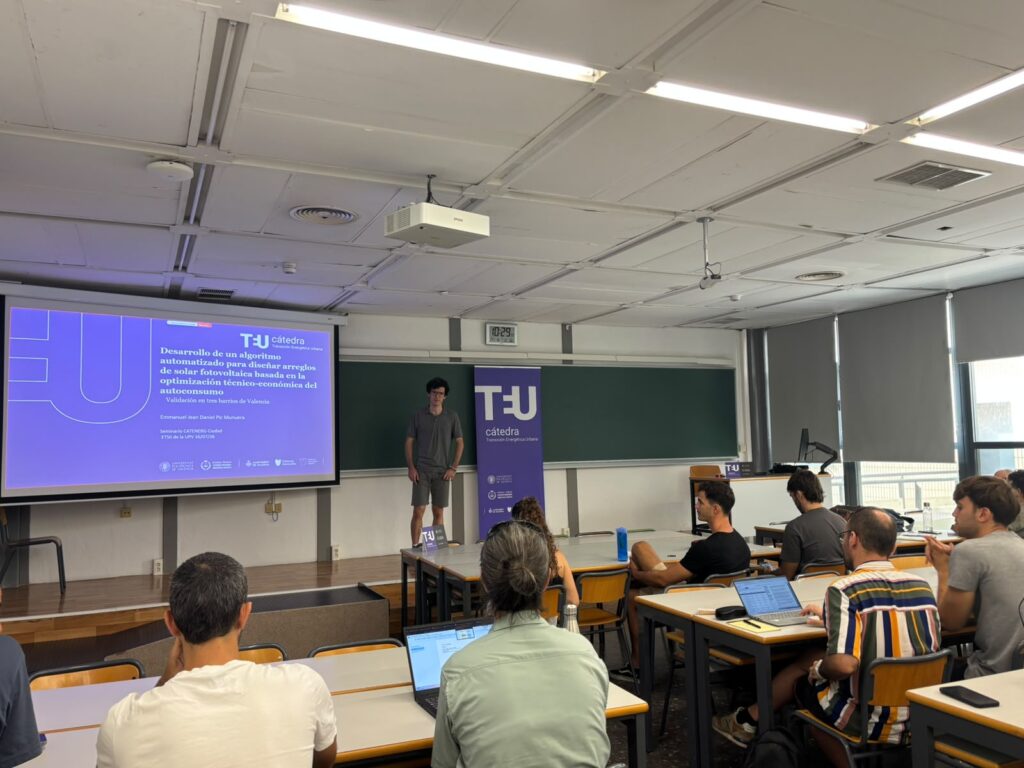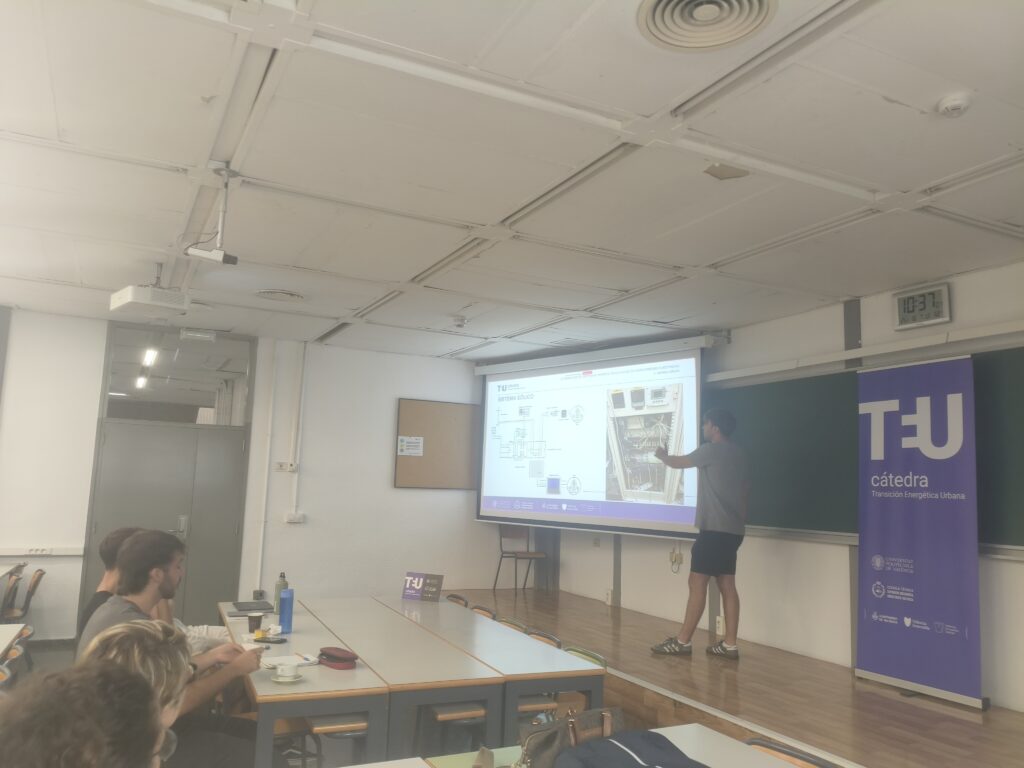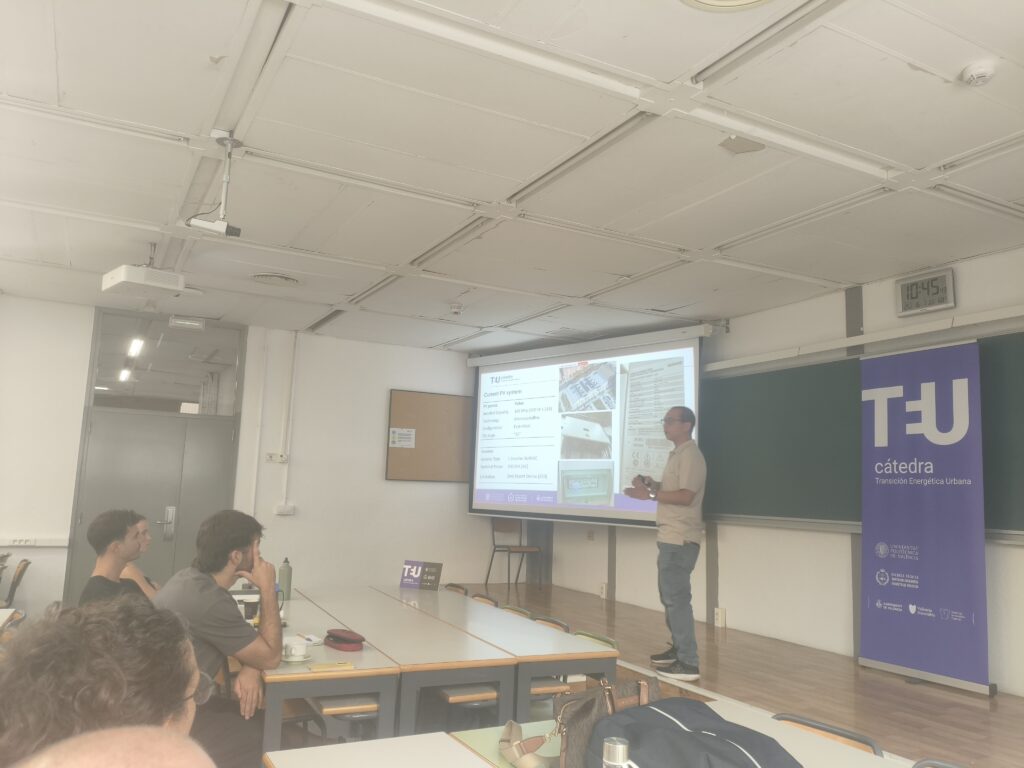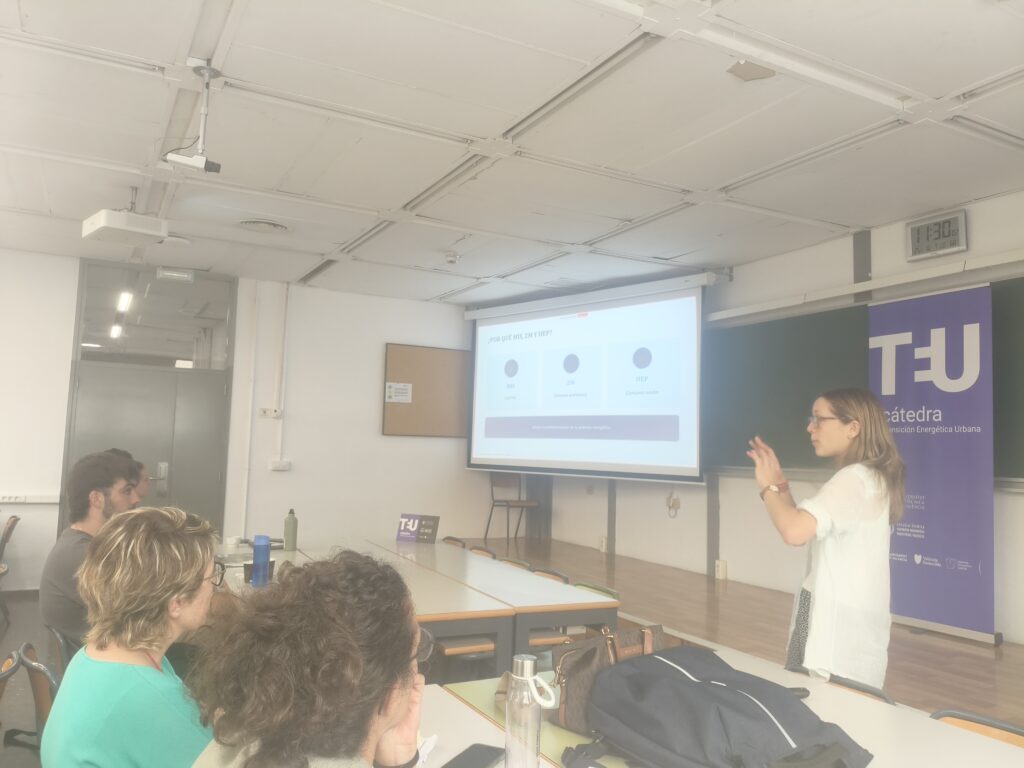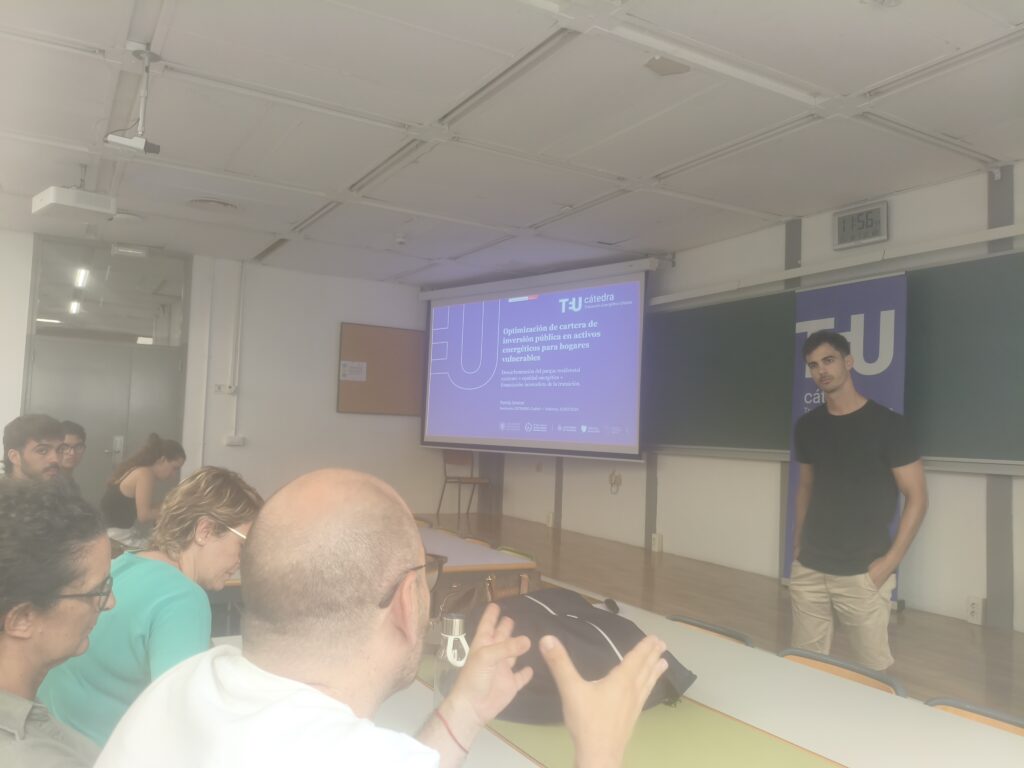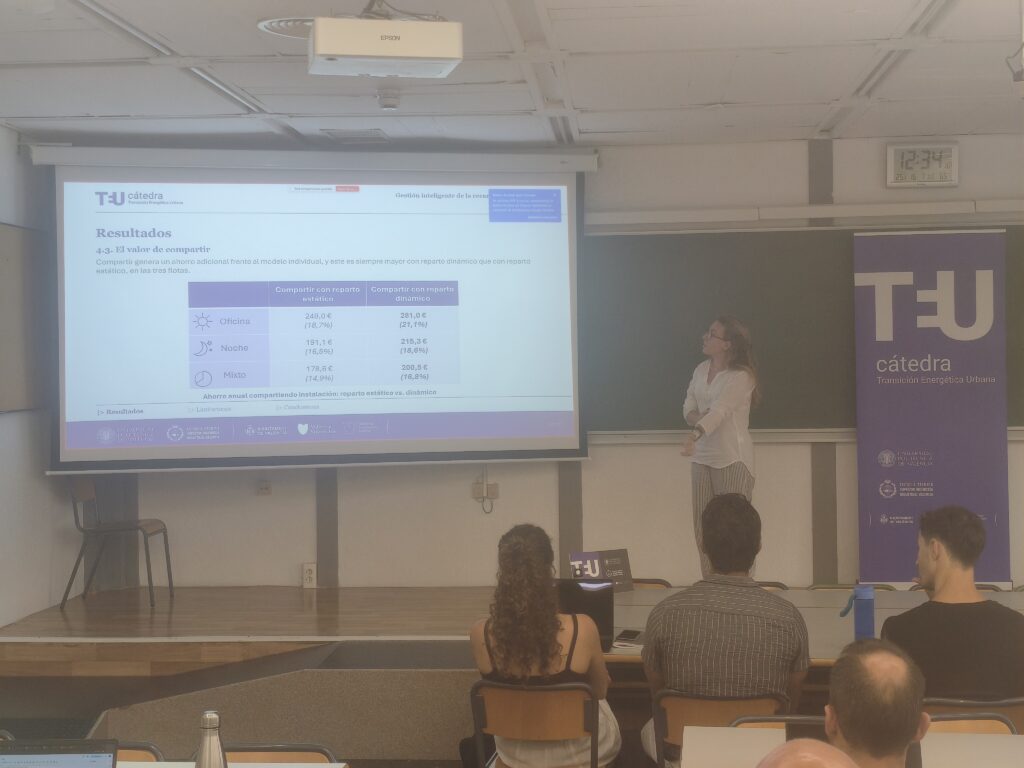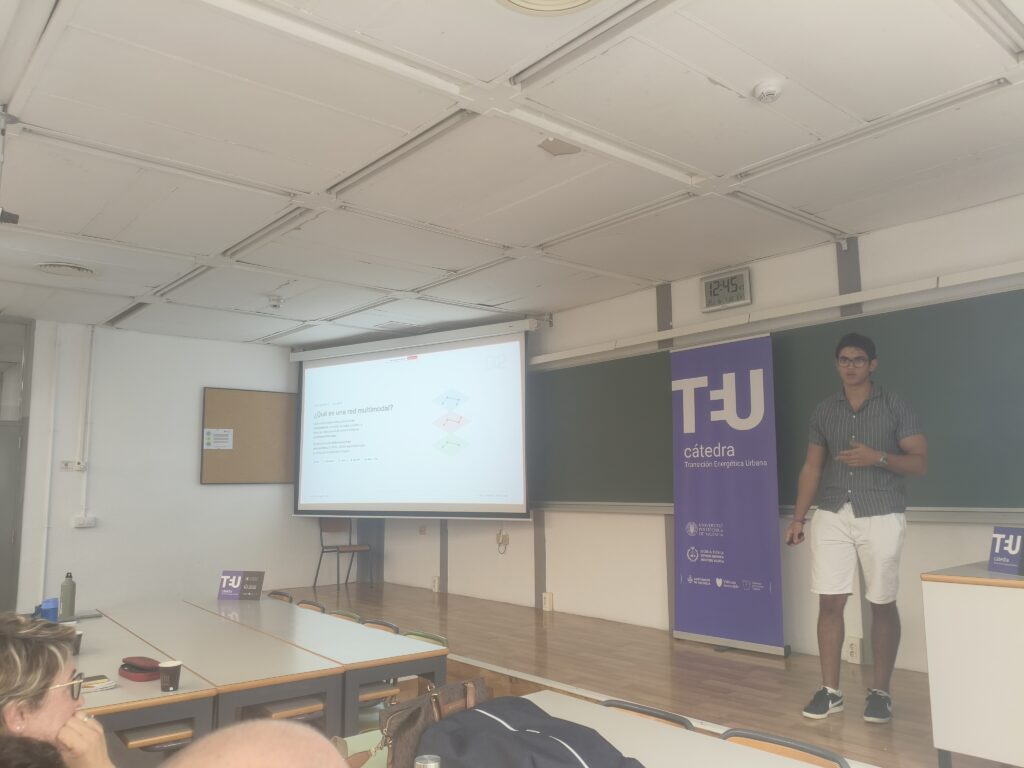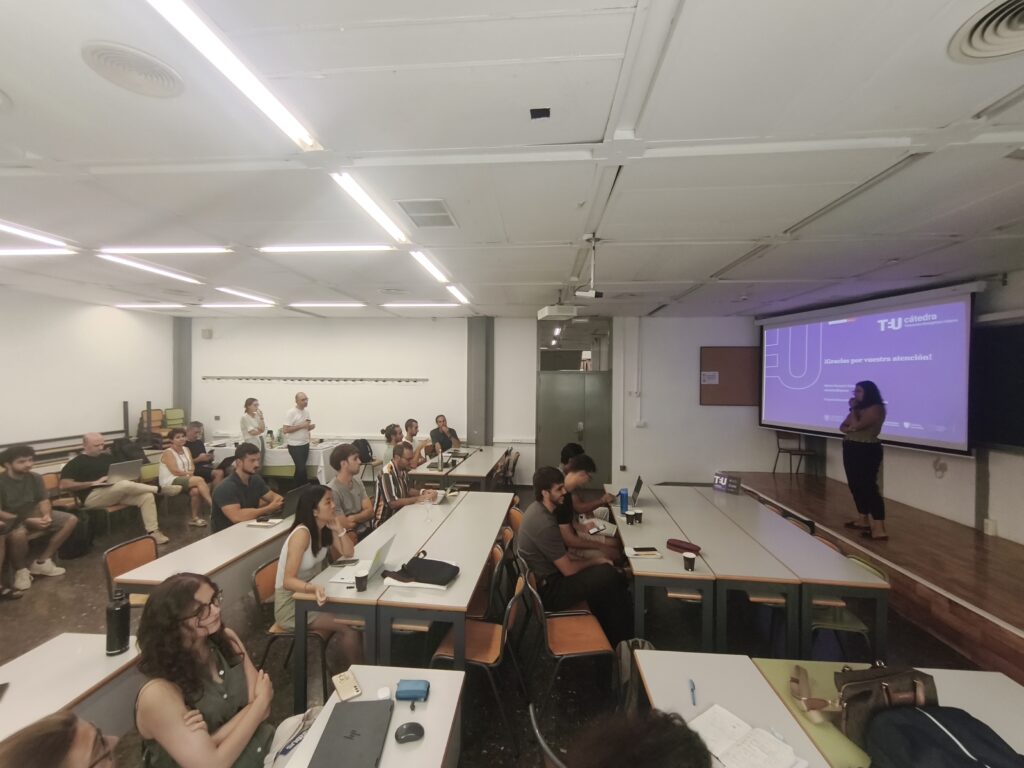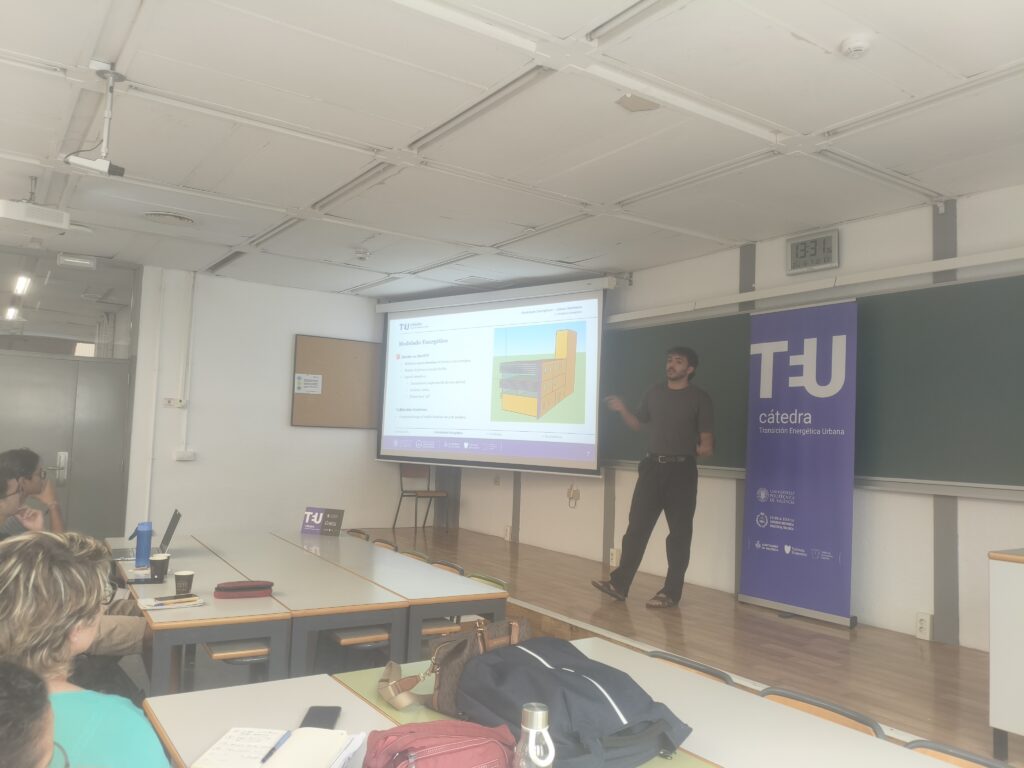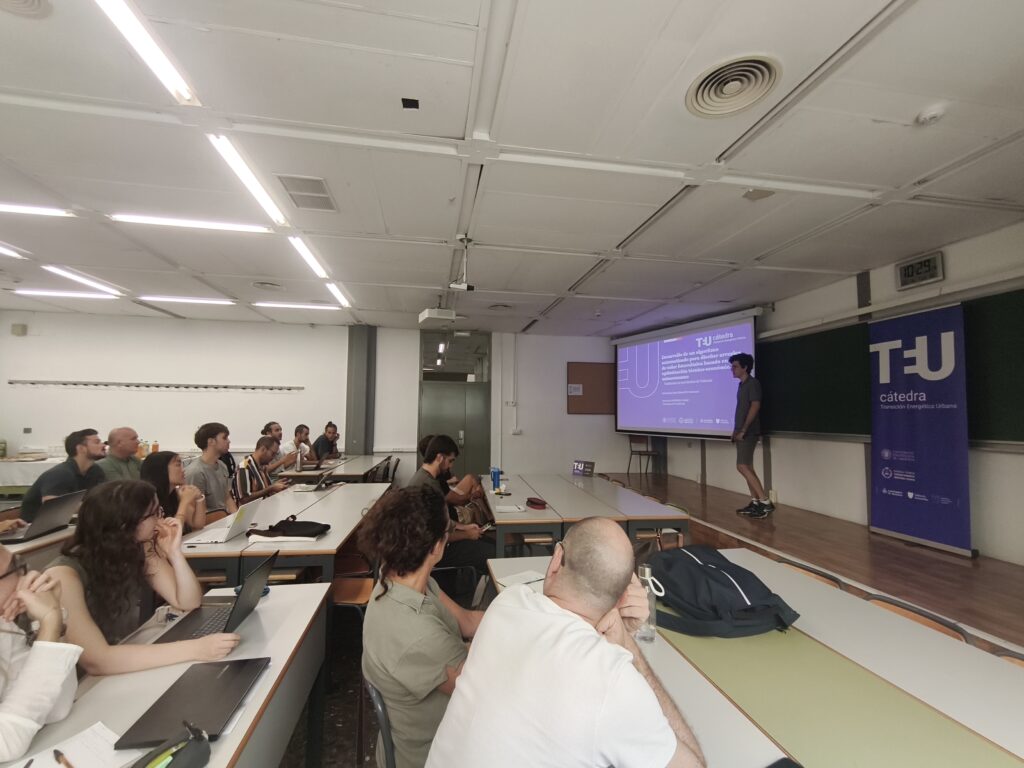
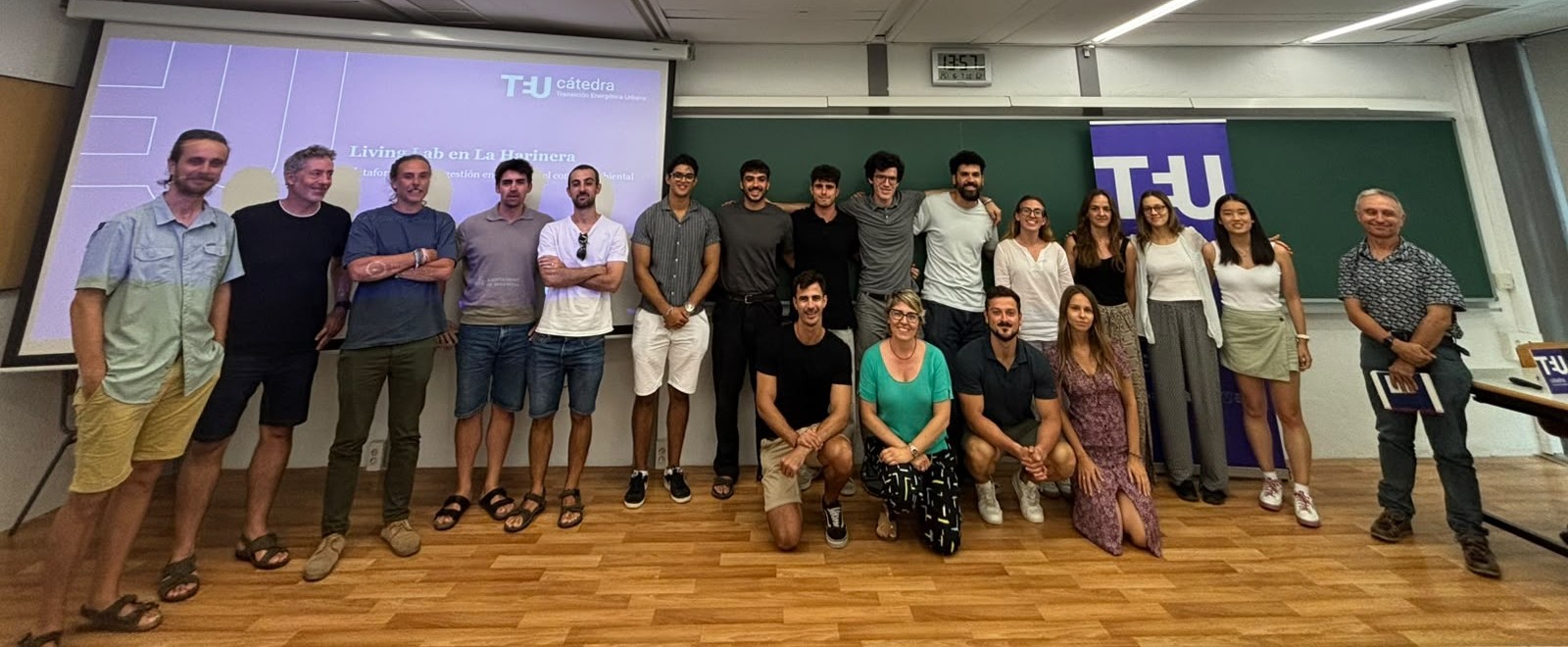
On Thursday 16 July 2026, the Escuela Técnica Superior de Ingeniería Industrial (ETSII) at the Universitat Politècnica de València (UPV) hosted a new edition of the CATENERG-City Knowledge Transfer Seminar. The event, held in Room 223 (Building 5H), brought together the research team, municipal technicians and collaborators to share the scientific progress made before the summer break.
The gathering highlighted the value of the young talent among UPV students, who are the true operational engine of the Chair. All of this technical work in knowledge transfer and applied research for the urban energy transition of València is made possible thanks to the support of our funding bodies: the OAM València Sostenible and the Fundación València Innovation Capital.
The day began with a welcome address from Carla Montagud Montalvá, Director of the Chair, who highlighted UPV’s commitment to climate neutrality and the importance of transferring data-driven solutions to the city’s public policy.
📁 Download the Seminar Presentations
We are making the materials presented during the seminar available to the academic and technical communities and the general public: Presentations
Main Technical Advances Presented
Throughout the seminar, 12 research projects were presented, structured around the Chair’s main strategic lines:
1. Assessment of Decarbonisation Strategies and Solar Mapping
-
Emmanuel Pic presented the Development of an automated algorithm for designing photovoltaic installations on buildings, based on the techno-economic optimisation of solar self-consumption. His methodology combines AI models and LiDAR data to determine the usable roof area without oversizing the installation, maximising the Net Present Value (NPV) over 30 years. After validating the model in the neighbourhoods of Benicalap, La Carrasca and L’Illa Perduda, he identified an installable capacity of 14 MW and an average annual electricity bill saving of 14% per building.
-
Mireia Roncero (on the project developed by Mariano Coronado) presented Bottom-up modelling for the assessment of decarbonisation strategies and residential energy retrofitting at neighbourhood scale. Starting from real gas and electricity consumption data by postcode, the model characterises the residential building stock and simulates four heat-pump penetration scenarios and three thermal envelope retrofit packages, quantifying capital expenditure (CAPEX), NPV, IRR and economic payback by neighbourhood.
-
Nouh Khouyi Etbar addressed resilience and planning with the Design and evaluation of a multimodal network as a tool for studying sustainable metropolitan mobility in València. Integrating open data (OSM, GTFS) into an architecture built with MongoDB, Docker and graph algorithms in Python/NetworkX, he structured the transport topology (57,920 km of road network, 25,837 km of walkable network and 1,322 km of cycle lanes) for direct use in QGIS.
2. Energy Modelling, Smart Charging and Electric Mobility
-
Natalia Méndez Pérez presented her Optimisation algorithm for the planning and sizing of urban electric vehicle charging infrastructure. The research includes the automatic detection of Transformer Substations (CTs) on public roads using neural networks (YOLO) applied to StreetView imagery (achieving 98% sensitivity), combined with a Particle Swarm Optimisation (PSO) algorithm to size chargers whilst reducing strain on the grid.
-
Laura Plazas García presented her Modelling of Smart Charging and electric vehicle demand flexibility for the optimisation of energy communities. Using mixed-integer linear programming (MILP) in Julia/JuMP/Gurobi on a residential case study, she demonstrated that coordinated electric vehicle charging management combined with collective self-consumption and dynamic allocation generates additional annual savings of between 15% and 21% compared with the individual model.
-
Pablo Andrés Llácer addressed the Integration of hybrid renewable systems in electrical microgrids, focusing on the development and experimental validation, in a laboratory/pilot plant setting, of an Energy Management System (EMS) to optimise the dynamic performance of batteries and photovoltaic installations.
3. Energy Justice, Vulnerability and Public Investment Portfolio
-
Chiara M. Nicolini presented her paper Towards a territorial methodology for measuring energy poverty in Valencia. Her research consolidates a stable technical tool for updating and mapping, at the scale of the 87 neighbourhoods, the official MIS (disproportionate expenditure) and 2M (hidden poverty) indicators, together with the incorporation of the HEP indicator (hidden consumption), enabling time-series tracking and informed decision-making.
-
Tomás Seveso presented the Optimisation of the public investment portfolio in energy assets for vulnerable households. His participatory (human-in-the-loop) model, formulated as MILP, assesses the profitability of redirecting traditional direct subsidies (such as the social bonus) towards investment in structural assets (shared photovoltaics on public rooftops, heat pumps and batteries) for 43 vulnerable households in València.
4. Living Labs and nZEB Optimisation at La Harinera and Las Naves
-
Carlos Vargas (Pearce Christie) set out the Energy diagnosis of the photovoltaic and storage system at Las Naves, focused on the design of an EMS for the intelligent management of its hybrid system (PV+BESS), enabling the application of power peak reduction (peak shaving) and tariff arbitrage strategies.
-
Sergi Ibáñez Moll presented the Analysis and design of building-integrated photovoltaic systems at the La Harinera building in Valencia. Using SAM software and thermal simulations, he analysed the replacement of solar louvres with 21.56 kWp of BIPV panels on the South and West façades, as well as the use of semi-transparent photovoltaic glass, assessing the impact on visual comfort and the 16% reduction in cooling demand.
-
Nicolás Martínez Iborra presented the Dynamic thermal modelling and optimisation of the La Harinera building towards achieving nZEB standard. Starting from the geometric design in SketchUp and dynamic multi-zone simulation in TRNSYS 18, he validated the building’s passive thermal behaviour using real sensor data, laying the groundwork for implementing active shading and air-conditioning control strategies.
-
Clara Fangli Caudeli closed the technical session with the Living Lab at La Harinera: Platform for energy management and environmental comfort. She deployed a containerised IoT architecture in Docker (Python, InfluxDB, Grafana, Streamlit) that integrates real-time data from AEMET, NESPRA environmental sensors and perceived comfort surveys, connecting the physical world to the virtual one through a digital twin.
Institutional Closing and Next Steps
Following the presentation of the projects, Carla Montagud Montalvá gave the institutional closing address for the event, congratulating the students and researchers on the high academic and technical standard of their results. The Director emphasised that the combination of mathematical rigour, digitalisation and social awareness positions the CATENERG Chair as a benchmark in knowledge transfer for climate neutrality.
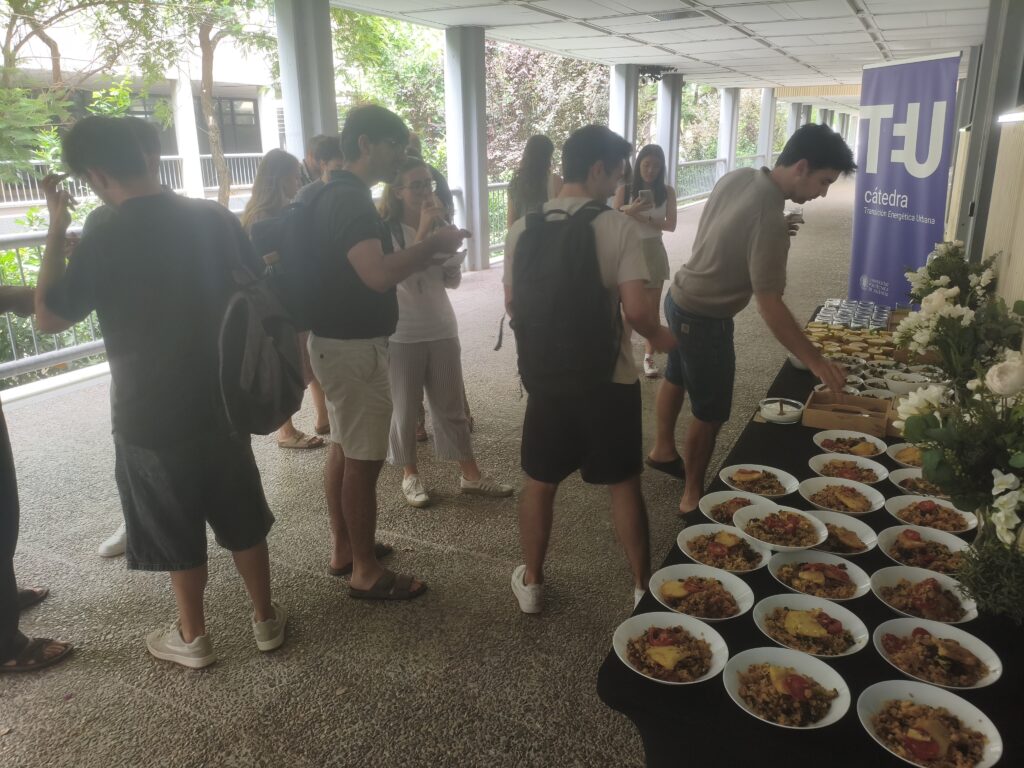
Afterwards, attendees enjoyed a cocktail lunch and networking space at the ETSII, strengthening collaborative ties between the university community, municipal bodies and the energy sector.
From the Urban Energy Transition Chair at UPV, we would like to warmly thank the students, tutors, and the institutional support of València Sostenible and València Innovation Capital. We continue working to turn university research into real solutions for our city.